
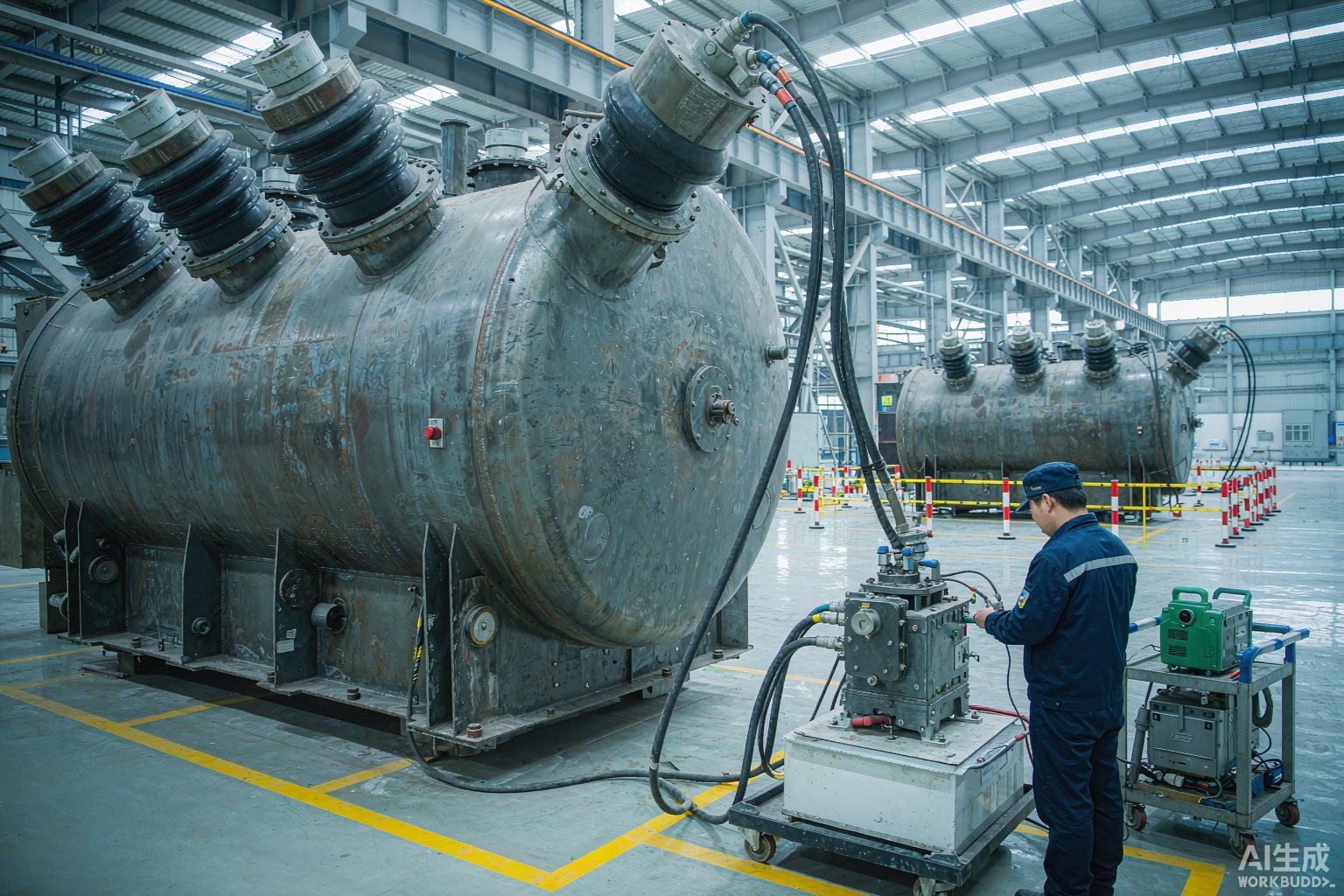
A transformer that fails on site is expensive in a way that a factory defect never is. Inside the works, a non-conforming measurement is a test report and a re-test. On a substation foundation six thousand kilometres away, it is a shipping claim, a site crew standing idle, and an argument about who pays.
The transformer factory acceptance test is the last point at which a problem is still cheap to fix and the buyer still holds leverage. This is the checklist we would want in front of us before signing off on any 35 kV to 110 kV unit, whether we attended in person or watched over a video link.
Why the FAT Carries More Weight When You Import
Domestic buyers can often live with a problem found at commissioning. Export buyers cannot.
- Sending a large power transformer back is rarely practical. Freight, insurance and handling usually exceed the value of the repair.
- Site repairs on a sealed, oil-filled unit are slow and rarely restore the original factory condition.
- Payment is usually tied to test acceptance, so once the FAT is signed, the commercial leverage shifts.
That is the reason to treat the FAT as a real engineering activity rather than a formality.
Routine Tests vs Type Tests
IEC 60076-1 sorts transformer tests into three groups, and knowing which is which tells you what you are entitled to see on your own unit.
| Group | Meaning | Typical examples |
|---|---|---|
| Routine tests | Performed on every single unit | Winding resistance, voltage ratio and phase displacement, impedance and load loss, no-load loss and current, dielectric routine tests, tap changer function |
| Type tests | Performed on one unit representing a design | Temperature rise test; impulse tests where required by voltage class or contract |
| Special tests | Only by agreement | Short-circuit withstand, noise level, special dielectric or mechanical tests |
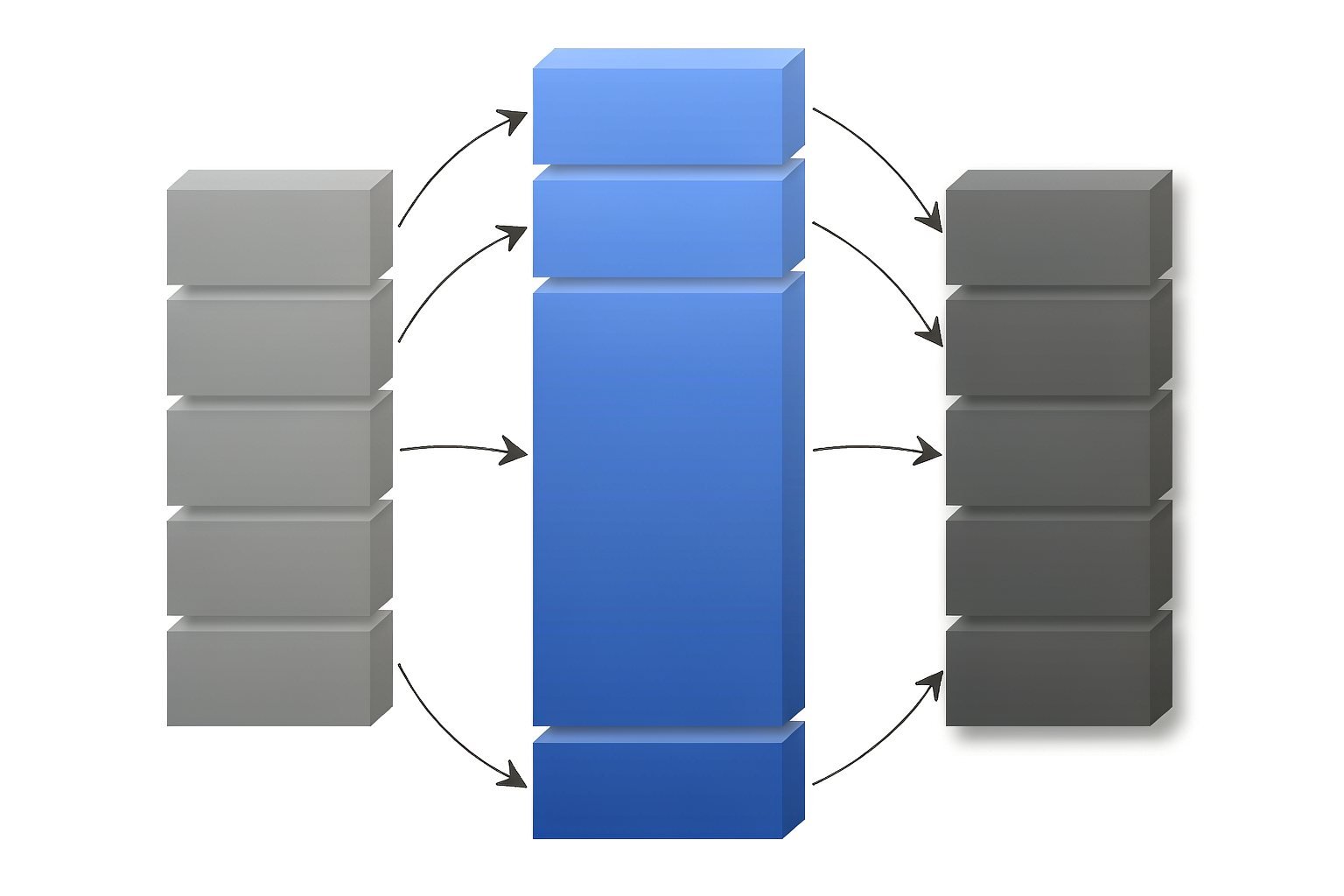
A transformer FAT checklist should be built around the routine group, because those are the tests run on the unit you are buying. Type and special test evidence often comes from an earlier, identical unit instead. If that arrangement is acceptable to you, say so in the contract; if you require the temperature rise test or impulse test on your own unit, that has to be agreed and priced at order stage.
The Core Routine Tests to Watch
1. Winding Resistance
Measured on each winding and, on a tapped winding, at every tap position. It confirms the conductors, joints and tap changer contacts are sound and that the phases balance. Results are corrected to a reference temperature so they can be compared with design values.
2. Voltage Ratio and Phase Displacement
The ratio is checked on every tap, and the phase displacement is verified against the specified vector group. This is the test that catches a wrongly connected winding before the unit ships. See our transformer vector group guide.
3. Short-Circuit Impedance and Load Loss
Measured at rated current and corrected to the reference temperature. The impedance figure drives your fault levels and your ability to run units in parallel, and the load loss is one of the two numbers that decide lifetime running cost. See power transformer losses and total cost of ownership.
4. No-Load Loss and No-Load Current
Measured at rated voltage and frequency with the other winding open. No-load loss runs 8,760 hours a year, so the measured value here is the single most commercially sensitive number in the whole report.
5. Dielectric Routine Tests
Normally two: a separate-source AC withstand test on each winding to earth and between windings, and an induced voltage test that stresses the inter-turn insulation. Partial discharge measurement is commonly included during the induced test on larger units where it has been specified.
6. Tap Changer Functional Test
The tap changer is run through every position, checking operation, position indication and continuity. On units fitted with an on-load tap changer, this is worth watching closely, because it is the most maintenance-sensitive component on the transformer. See our on-load tap changer guide.
7. Oil Tests
Dielectric strength and water content at minimum, and a dissolved gas analysis baseline. That baseline DGA is easy to skip and worth insisting on: it is the reference point against which every future oil sample will be compared.
8. Tank, Accessories and Protection
- Tank pressure or leak test.
- Functional checks of cooling equipment, fans and pumps.
- Settings and alarms on the Buchholz relay, pressure relief device, and winding and oil temperature indicators.
- Marshalling box wiring check against the schematic.
The standards themselves are covered in more depth in our power transformer testing standards guide.
Documents to Collect Before It Ships
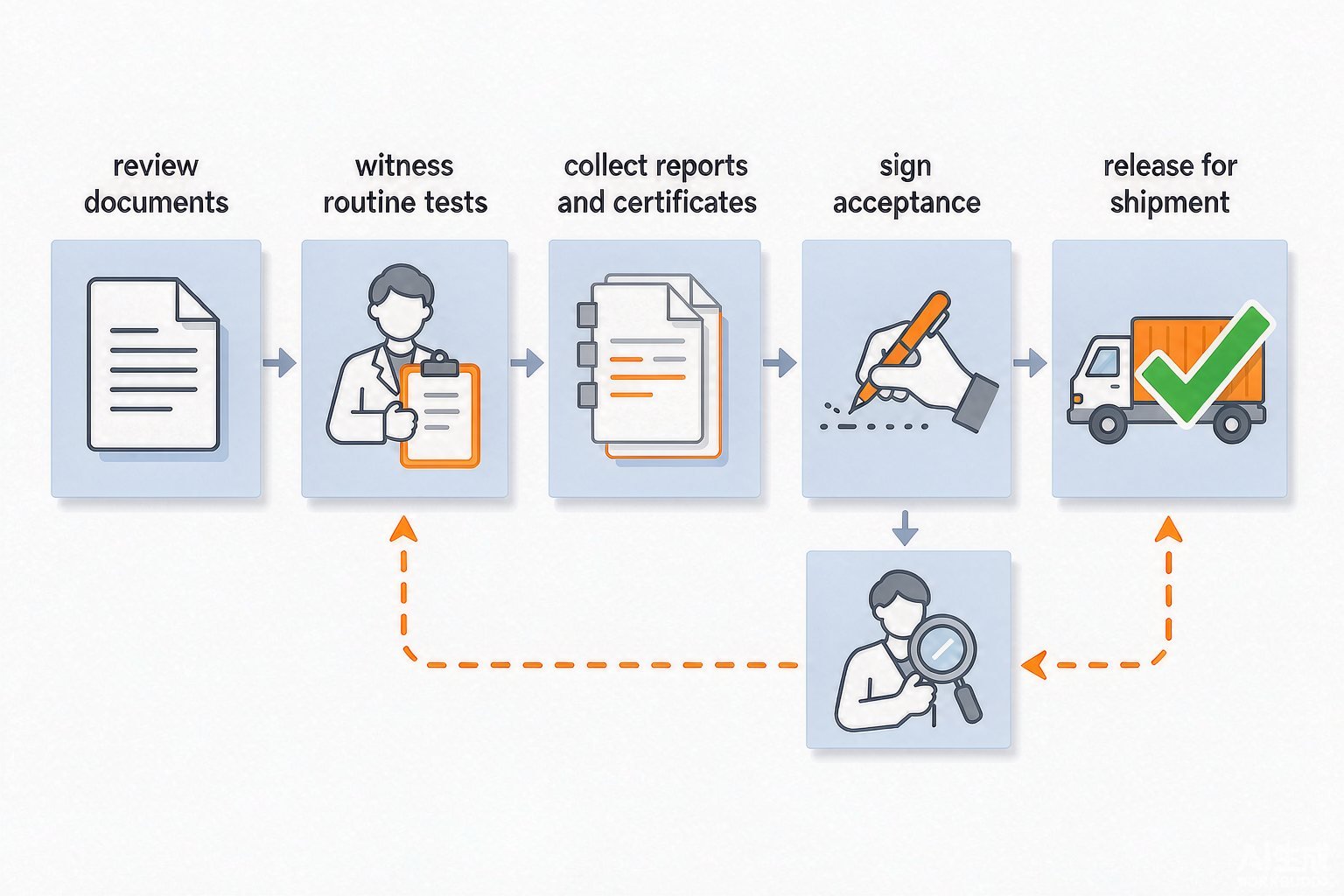
Test data alone is not enough. Ask for the full set while the unit is still on the works floor:
- The transformer acceptance test report with measured values, not only guaranteed values.
- Type test certificates, if you are accepting evidence from a previous unit.
- Mill certificates for core steel and winding conductor.
- Outline and foundation drawings, plus a photograph of the nameplate.
- Oil test results including the DGA baseline.
- Spare parts list, operation and maintenance manual, and written warranty terms.
Red Flags Worth Slowing Down For
- “Compliant with IEC 60076” with no measured values attached. Compliance is not a measurement.
- Only guaranteed values presented, never measured ones. You will live with the measured figures.
- A deviation request raised late, particularly on losses or temperature rise.
- An interrupted test sequence followed by a re-test without a clear explanation.
- Serial number inconsistencies between the nameplate, the test report and the unit on the floor.
Any of these is reason to ask for the raw readings and, if necessary, a repeat test before release.
Witnessing in Person vs Remotely
Most overseas buyers now witness a combination of both, and remote witnessing works well if you set the rules in advance.
- Ask for live instrument readings, not a summary sheet typed up afterwards.
- Agree the notice period for test dates in the contract, along with what happens if the buyer cannot attend.
- Confirm who signs the acceptance and what that signature commits each side to.
- For a first order with a new supplier, attend in person if you can. The value is in what you notice around the test, not only in the test itself.
Conclusion
The FAT is the one checkpoint where the buyer has both information and leverage. Knowing which tests are routine, which are type tests, and what documents belong in the file turns it from a formality into a genuine gate on quality.
Every transformer we build is routine-tested before shipment, and we provide the measured loss values and vector group verification report with the unit. Buyers are welcome to witness in person or by video, and we issue the measured figures rather than the guaranteed ones.
Planning an order? Send us your rating, voltage ratio and applicable standard, and we will return the proposed test programme, the tolerances we will guarantee, and a sample test report so you can see the format before you commit.