
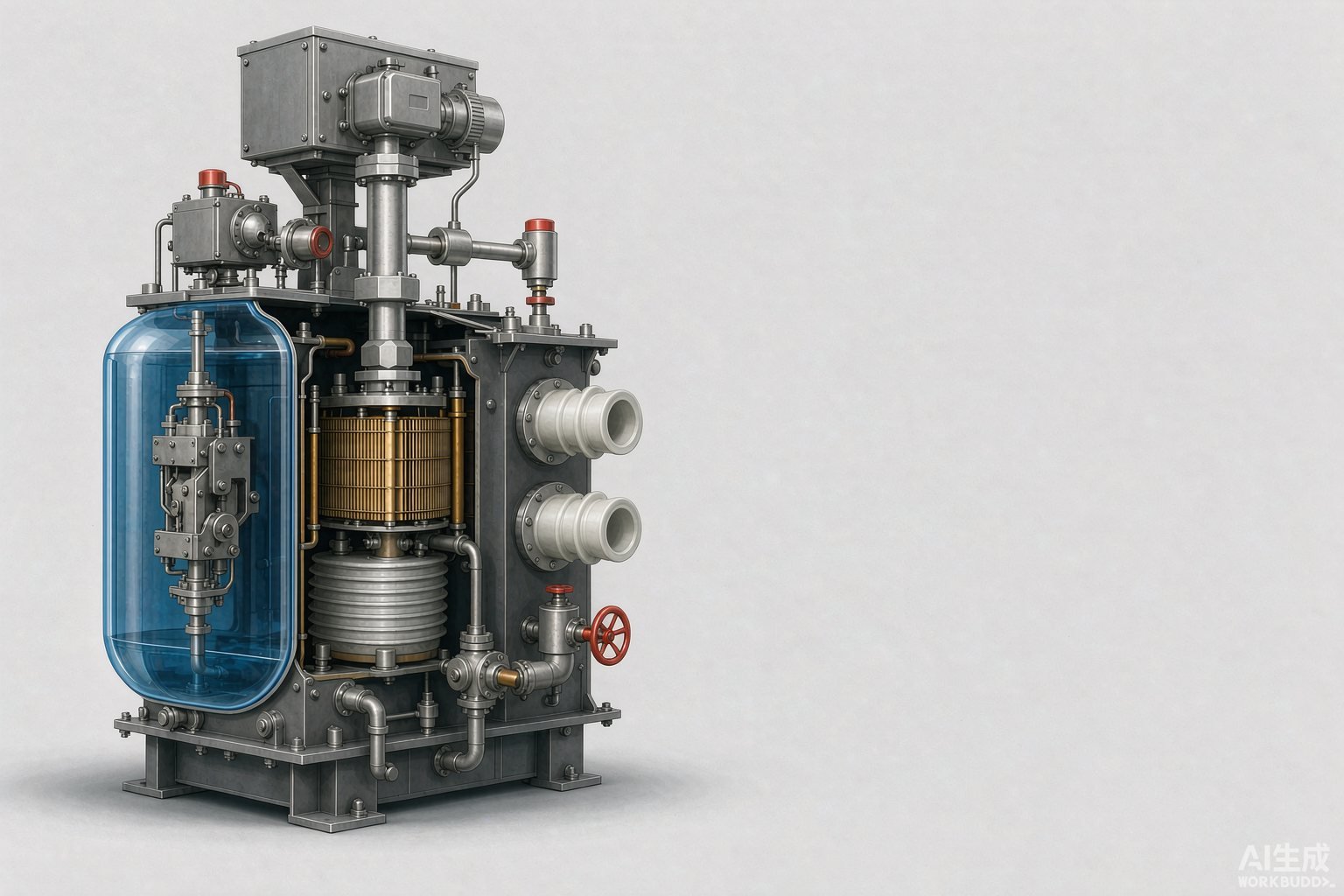
Network voltage moves all day. Load builds through the morning, drops after midnight, and swings with every large motor start or feeder switching operation on the same bus. A transformer with a fixed turns ratio inherits all of that, and the voltage on its secondary side moves with it.
An on-load tap changer is the component that keeps the output within limits while the transformer stays energised and loaded. On 35 kV and 110 kV units it is usually the only significant moving assembly inside the equipment, and it is the part most likely to decide how much maintenance the transformer needs over a 30-year life.
This guide covers what a tap is, how an on-load tap changer works, where it differs from an off-circuit tap changer, and the items worth pinning down before you issue an RFQ.
What a Tap Actually Is
A transformer’s output voltage follows its turns ratio. Change the number of effective turns on one winding and you change the ratio, which moves the secondary voltage up or down.
That is what a tap does. A section of the high-voltage winding is brought out to a set of connection points, and the tap changer selects which point is in circuit. The specification is usually written as a range and a step size. A common arrangement on a 110 kV unit is ±8 × 1.25%, meaning eight steps above and eight below the principal tapping, each step worth 1.25%, for a total regulating range of ±10%.
Taps are normally placed on the high-voltage winding rather than the low-voltage side. The HV winding carries the lower current, so the tap leads, selector contacts and switchgear all handle less current than they would on the LV side.
OLTC vs Off-Circuit Tap Changer
The distinction that matters commercially is whether the transformer has to be de-energised to change taps.
| Aspect | Off-circuit tap changer (DETC) | On-load tap changer (OLTC) |
|---|---|---|
| Also called | De-energised tap changer, no-load tap switch | OLTC, on-load tap switch |
| Changing a tap | Transformer must be de-energised and isolated | Done live, under full load |
| Typical range | ±2 × 2.5%, sometimes ±5% | ±8 × 1.25% or ±10 × 1.5% |
| Adjusted | Rarely, often seasonally or at commissioning | Continuously, automatically |
| Control | Manual, by hand | Motor drive plus automatic voltage regulator |
| Where used | Small and medium units, stable networks | Substation and generator transformers, networks with daily voltage swing |
| Cost and upkeep | Low | Adds capital cost, a drive mechanism, and a maintenance obligation |
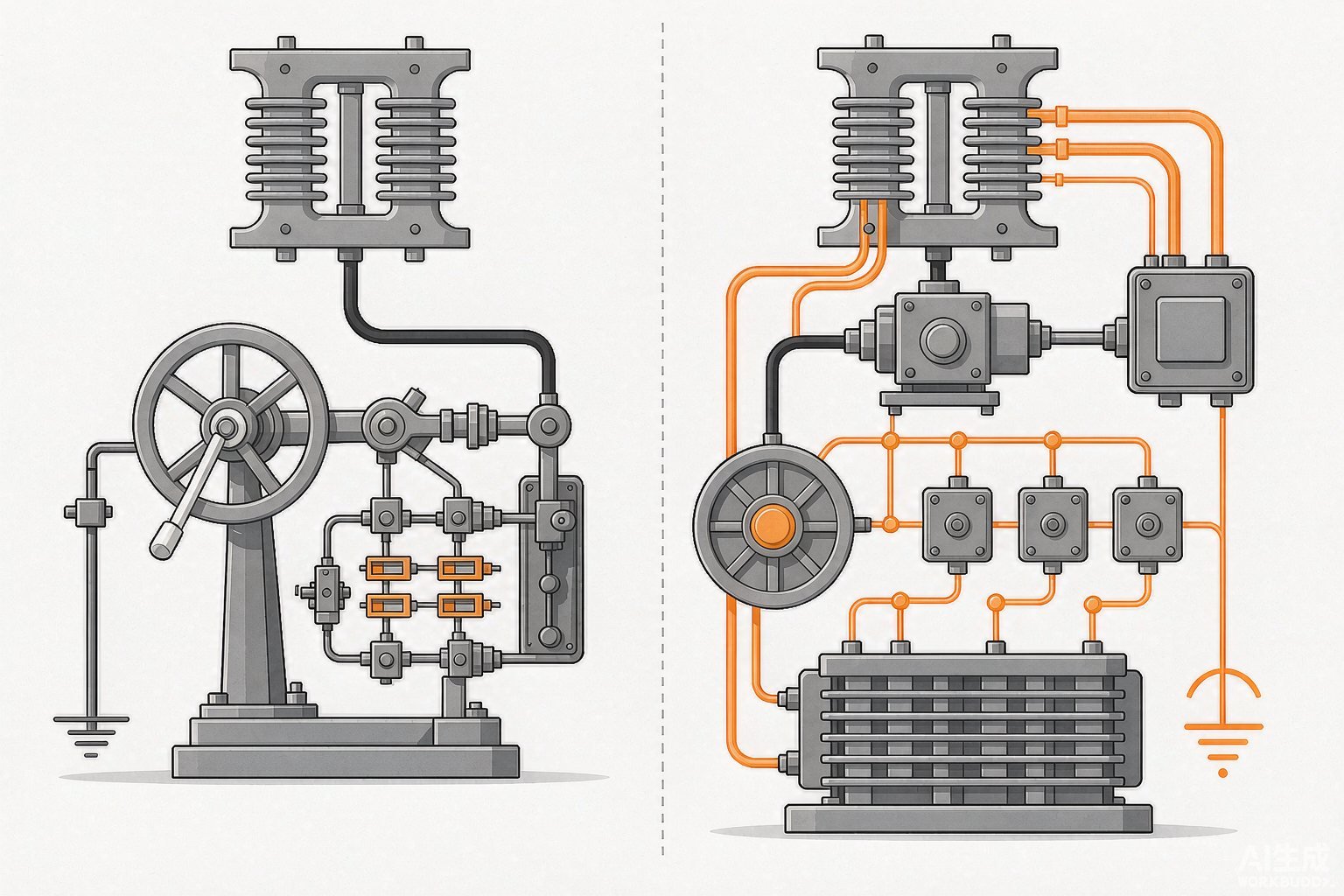
If your voltage varies slowly and predictably, an off-circuit tap changer set once at commissioning may be all you need. If the secondary voltage has to hold a tight band through daily load cycles, or the transformer feeds a network where several sources interact, an OLTC earns its cost.
One practical warning: an OLTC is frequently treated as a commodity accessory and left unspecified. It is the component with the highest failure rate on a transformer, and replacing it is far harder than specifying it correctly the first time.
How Does an On-Load Tap Changer Work?
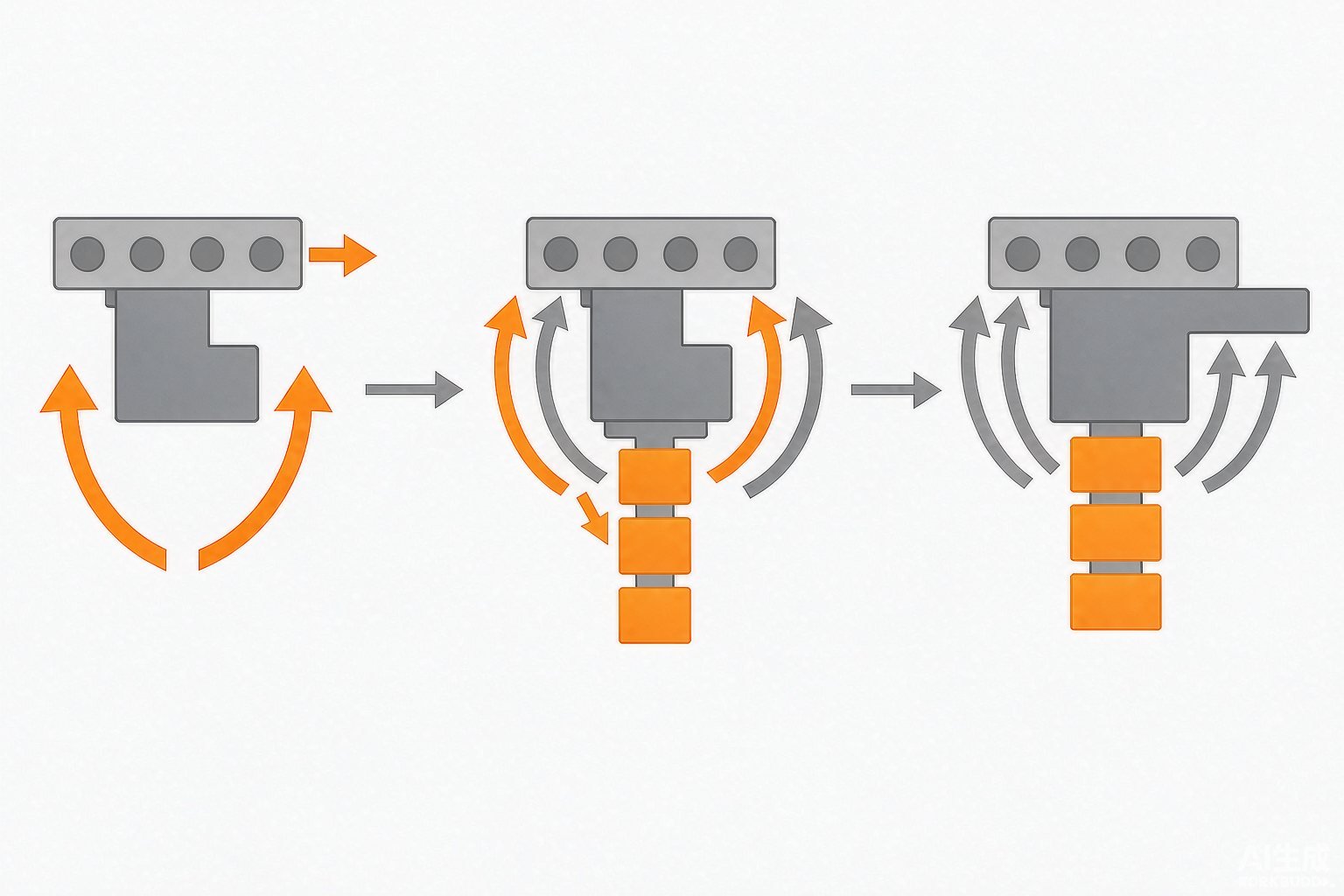
A tap change involves two separate jobs, and a resistor-type OLTC does them with two separate mechanisms.
- Select. A selector switch moves to the next tap while carrying no current.
- Transfer. A diverter switch moves the load current across from the old tap to the new one.
The hard part is the transfer. The load current must never be interrupted, and the section of winding between two taps must never be short-circuited. The diverter solves both with transition resistors: for a few tens of milliseconds the resistors bridge the two taps, carrying the load while limiting the circulating current through the bridged winding section. Then the diverter completes the move and the resistors drop out of circuit.
The whole operation is over in tens of milliseconds, and the supply to the load never breaks.
Two consequences follow from this, and both matter to a buyer:
- Arcing is concentrated in the diverter switch. Switching under load always produces an arc. In most designs the diverter sits in its own oil compartment, separate from the main tank, so the byproducts of arcing do not contaminate the oil around the windings and core. When you ask about OLTC oil, this is what is meant.
- The diverter is a wear item. Every operation erodes the contacts a little, and the oil in the diverter compartment degrades with each switching arc.
A motor drive mechanism operates the mechanism, and an automatic voltage regulator closes the loop, comparing the measured voltage against a target and commanding a tap change when the deviation exceeds a set band with a deliberate time delay.
What to Specify in Your RFQ
These are the items that cause the most friction later if they are left open:
- Tapping range and step size. State it as a number, for example ±8 × 1.25% on the HV winding. Do not write “suitable for system voltage variation.”
- Which winding is tapped. Usually the HV winding, but say so.
- Rated through-current and step voltage. These come from the transformer design, not the tap changer alone.
- Tap changer make and model. Either name an acceptable manufacturer and model, or require the manufacturer to declare the proposed unit for approval before order placement.
- Motor drive and control. Control supply voltage, local and remote operation, tap position indication, and the analogue or digital position signal you expect at the substation SCADA.
- Oil arrangement. Whether the diverter has a separate compartment, and whether an online oil filtration unit is fitted or provisioned.
- Protection. The protective relay that trips on oil surge from the diverter compartment, plus its alarm and trip contacts.
On-Load Tap Changer Maintenance
This is the part most often underestimated at the buying stage.
The contacts wear with each operation and the diverter oil degrades with arcing, so an OLTC needs periodic attention whether or not the transformer itself does. Overhaul intervals are set by the tap-changer manufacturer, and they are usually expressed either in operating cycles or in years, depending on the model. Ask for the specific schedule for the model you are buying rather than assuming a generic interval, because the numbers vary considerably between designs and duty.
Three questions worth asking before you order:
- Is an operations counter fitted, so maintenance can be scheduled on actual duty rather than guesswork?
- Is online oil filtration fitted or provisioned? For a unit that changes taps many times a day, this is usually worth having.
- How is the diverter accessed for inspection? Some designs allow the diverter to be lifted out without draining the main tank, which changes the outage time substantially.
If the unit will switch frequently, say so in the enquiry. A tap changer selected for occasional operation is a different proposition from one switching dozens of times a day.
Where the OLTC Meets the Rest of the Specification
Tap changing does not sit in isolation from the other choices on a 35 kV to 110 kV unit:
- Cooling — duty at extreme tap positions changes the losses and the heat the cooling system has to remove. See our power transformer cooling methods guide.
- Losses — guaranteed loss figures are normally stated at the principal tapping. Operation away from it shifts the figures, so confirm which tapping the guarantee refers to. See power transformer losses and total cost of ownership.
- Vector group — taps change the turns ratio, not the winding connections or phase displacement. See our transformer vector group guide.
- Testing — the tap changer is functionally checked through all positions during routine testing. See power transformer testing standards.
Conclusion
The tap changer is the one component on a power transformer that moves, wears, and needs scheduled attention. Deciding between an off-circuit tap changer and an OLTC comes down to how much your voltage moves and how tightly it has to be held. Once you choose an OLTC, the specification details — range, step size, model, control interface, and the maintenance schedule for that specific model — are worth settling before the order rather than after.
We build 35 kV to 110 kV oil-immersed power transformers with either off-circuit or on-load tap changing, and every unit is routine-tested with the tap changer function-checked through all positions before shipment.
Specifying a unit now? Send us your voltage ratio, rating, tapping range and control requirements, and we will return a proposal with the tap changer model, maintenance schedule and measured test figures for your evaluation.