
33 kV is the workhorse sub-transmission voltage in India, and a unit bought for it has to satisfy three documents at once: the national standard, the utility schedule and the state DISCOM specification. A transformer that meets IEC 60076 can still lose a technical bid because the loss capitalization formula, the terminal arrangement or the fitting list was not written the way the utility expects. This guide covers the standards that apply, the fields worth fixing before an enquiry goes out, how Indian utilities weigh losses, and the paperwork that should travel with the shipment.
Written for procurement managers and EPC engineers sourcing 33 kV class units for utility, industrial and renewable projects. For the wider range, see our power transformer range.
What a 33 kV power transformer does in an Indian substation
The usual duty is stepping down to 11 kV at a distribution substation, or feeding a large industrial load directly. Dyn11 is the common vector group for 33/11 kV distribution work: the delta primary traps triplen harmonics, and the grounded star secondary supports earth fault protection. Where the unit feeds a generator or handles step-up duty, YNd11 is normally specified instead, and the grounding arrangement gets settled alongside the system earthing study.
Ratings in this class sit inside the 6.3–63 MVA range we build, and the two decisions that shape the design are cooling and impedance. ONAN with an ONAF second stage is the usual configuration, with the staged ratings shown separately on the plate. Impedance comes from the fault level the switchgear and the network can tolerate, so it is a system value rather than a preference, and it belongs in the enquiry. Renewable projects also use this voltage on the collector side, where the cyclic duty feeds into the thermal design as its own input.
Standards and compliance: IS 2026, IEC 60076 and utility schedules
Indian requirements rest on IS 2026, which is technically aligned with the IEC 60076 series. A design built to the IEC series will generally satisfy the corresponding IS requirements, but the utility schedule governs wherever the two differ. Three layers apply on most projects:
- The IS 2026 series, covering general requirements, temperature rise, insulation levels and dielectric tests, and terminal and tapping arrangements. Name the applicable parts and the edition.
- The IEC 60076 series, used directly on internationally specified projects. IEC 60076-2 covers temperature rise and IEC 60076-3 the dielectric test sequence.
- CBIP and CEA documents plus the state DISCOM schedule, which add the fitting lists, the loss capitalization method, the painting system and the inspection requirements that vary from state to state.
Be precise about approvals in the contract. Any unit supplied must comply with IS 2026 and IEC 60076 as applicable. Where a project needs BIS registration, national or state type approval, or utility vendor approval, confirm that requirement against the specific order and the current rules before committing the manufacturing program. A general statement of compliance in a quotation is not evidence of an approval the contract does not name.
Our 33–35 kV power transformer range is built to whatever standard the order names, so state the standard and any approval requirement in the enquiry and it can be priced and documented from the start.
Specification fields to fix before you enquire
Late quotations on 33 kV units usually trace back to the same missing inputs. Fixing them before the enquiry goes out is the cheapest schedule insurance available.
| Field | What to state | Why it changes the design |
|---|---|---|
| Rated power | MVA at each cooling stage, with the cooling designation | Sets the core and coil size and the radiator area |
| Voltage ratio and tappings | HV/LV kV, tapping range, on-load or off-circuit tap changer | Determines the winding design and the tap changer type |
| Vector group | Dyn11, YNd11 or as required by the system study | Affects harmonic behavior, grounding and protection |
| Impedance voltage | Percentage at the principal tapping, with tolerance | Governs fault level and parallel operation |
| Frequency and phases | 50 Hz, three-phase | Confirms the design basis for the Indian network |
| Cooling | ONAN, ONAF or staged, to IEC 60076-2 | Sets the rating stages and the auxiliary load |
| Ambient and altitude | Maximum and minimum ambient, site altitude, indoor or outdoor | Temperature rise limits are referenced to ambient; altitude reduces air density |
| Insulation levels | LI, SI and power-frequency withstand levels per IS 2026 / IEC 60076-3 | Sets clearances, bushing class and test voltages |
| Fittings and protection | Buchholz relay, winding and oil temperature indicators, pressure relief, MOG, valves, marshalling box | Utility schedules differ; retrofitting on site is expensive |
| Loss requirements | No-load and load loss, or the loss capitalization formula to be used | Drives the core material and conductor section |
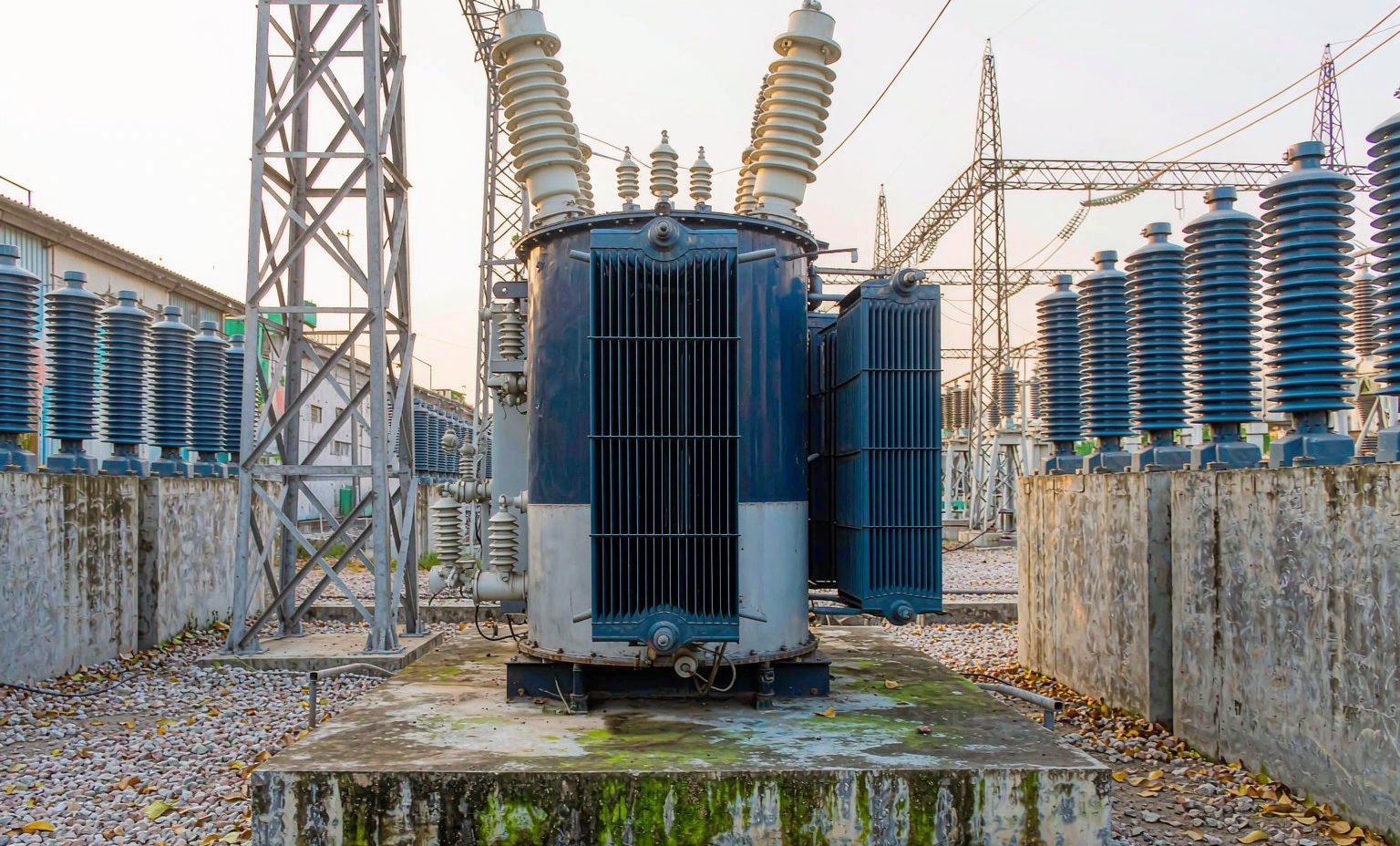
Loss evaluation: how Indian utilities compare bids
Indian utility tenders rarely award on purchase price alone. The common practice is loss capitalization, where no-load loss and load loss each get a notional value per kilowatt that is added to the bid price, so a cheaper transformer with higher losses can lose to a costlier one. Two things follow. Ask for losses as guaranteed values with tolerances at the principal tapping and the rated cooling stage rather than typical values, and ask which capitalization formula applies, since deciding it in advance stops a lowest-price comparison that ignores decades of no-load loss.
Where lower losses are needed, the levers are core material and flux density for no-load loss, and conductor section for load loss. Each adds cost, so the comparison worth making is the capitalized total rather than the invoice.
Testing and inspection before shipment
Routine tests on a 33 kV power transformer are defined in IS 2026 and IEC 60076-1 and normally cover winding resistance, voltage ratio and vector group verification, impedance and load loss, no-load loss and current, the dielectric routine tests, and temperature rise on the applicable type-test basis. Impulse testing, short-circuit withstand evidence and partial discharge measurement are separate items that have to be named explicitly, because they are not automatic.
Inspection needs planning early. Indian utility orders commonly require stage inspection during manufacturing as well as final acceptance testing, with the inspector nominated by the purchaser. Agree the hold points, the notice period and the documents to be provided before the program starts, since a hold point discovered a week before it falls due is a schedule risk rather than a quality measure. Where partial discharge measurement is required, the acceptance magnitude, the trend behavior allowed during the voltage hold and the action on a first exceedance all belong in the technical schedule.
Delivery, packing and site readiness
Our manufacturing program for this rating range runs to 30 days from approved drawings, with packing and inland transport to the port on top. The two variables that actually move the date are the test scope and the drawing approval cycle, and both sit as much with the purchaser as with the manufacturer. The oil handling arrangement is agreed at order stage, either filled or drained and nitrogen-filled, and that decision reaches into the site program: a unit arriving drained needs oil treatment and filling capability before it can be energized.
Site preparation deserves the same attention as the factory program. Foundation rails and the oil containment pit have to be ready before the unit lands, the grounding grid has to be complete, and clearances around radiators have to match the outline drawing rather than the space that happens to be free. Commissioning delays on 33 kV installations are usually civil, not electrical.
Documents to require with the shipment
| Document | Purpose | When needed |
|---|---|---|
| Test reports, routine and type as applicable | Evidence that the unit meets the specified standard | Before dispatch; required for inspection release |
| Certificate of compliance with the ordered standard | Contractual record of the standard applied | With the dispatch documents |
| Approved outline and general arrangement drawings | Civil works, clearances and bushing connections | Before foundation work starts |
| Winding resistance, ratio and vector group records | Baseline for later condition comparison | With the test reports |
| Oil test certificate and filling records | Confirms oil quality and treatment | Before energization |
| Installation, operation and maintenance manual | Site handling, commissioning and maintenance intervals | With the shipment |
| Packing list and shipping marks | Customs clearance and site receipt | With the dispatch documents |
| Tap changer manual and wiring diagrams | Commissioning and protection interfacing | With the shipment |
FAQ
Which standard applies to a 33 kV power transformer in India: IS 2026 or IEC 60076?
IS 2026 is the national standard and is technically aligned with IEC 60076, so a design built to the IEC series generally satisfies the corresponding IS requirements. The utility or DISCOM schedule governs where the two differ, so name both the standard and the utility specification in the order.
What vector group should I specify for a 33/11 kV substation transformer?
Dyn11 is the usual choice for 33/11 kV distribution duty: the delta primary traps triplen harmonics and the grounded star secondary supports earth fault protection. Confirm it against your system study, and use YNd11 where the transformer feeds a generator or step-up duty.
Do Indian tenders require type tests on every unit?
Routine tests are performed on every transformer. Type tests, including temperature rise and impulse, are performed on a representative unit or evidenced from a previous test record as the applicable standard and the utility schedule permit. Short-circuit withstand is normally evidenced by design and previous test records rather than repeated per unit. Confirm the requirement in the technical schedule.
How are losses evaluated in a utility bid?
Commonly by loss capitalization, where no-load and load loss are each assigned a notional value per kilowatt and added to the bid price. The formula differs between utilities, so ask which one applies and require losses stated as guaranteed values with tolerances rather than typical values.
Can 33 kV units be supplied for solar or storage projects?
Yes. The 33 kV winding is a common collector or interface voltage for solar and battery projects, and the extra inputs are the duty cycle, the harmonic content from the inverters and the ambient conditions at the site. State them in the enquiry so the thermal design and the conductor sizing reflect the actual duty.
Send the specification, get a comparable quote
Two quotations for 33 kV units are comparable only if both were written against the same schedule. Send us the rating, voltage ratio, vector group, impedance, cooling designation, ambient conditions and the standard your project follows, and we will come back with the staged ratings, the guaranteed losses and the test scope stated separately. Browse the 33–35 kV range, see the full product catalogue, or contact our team to discuss the requirement.