Technical Parameters & Ratings
IEC / ANSI CertifiedFactory Standard
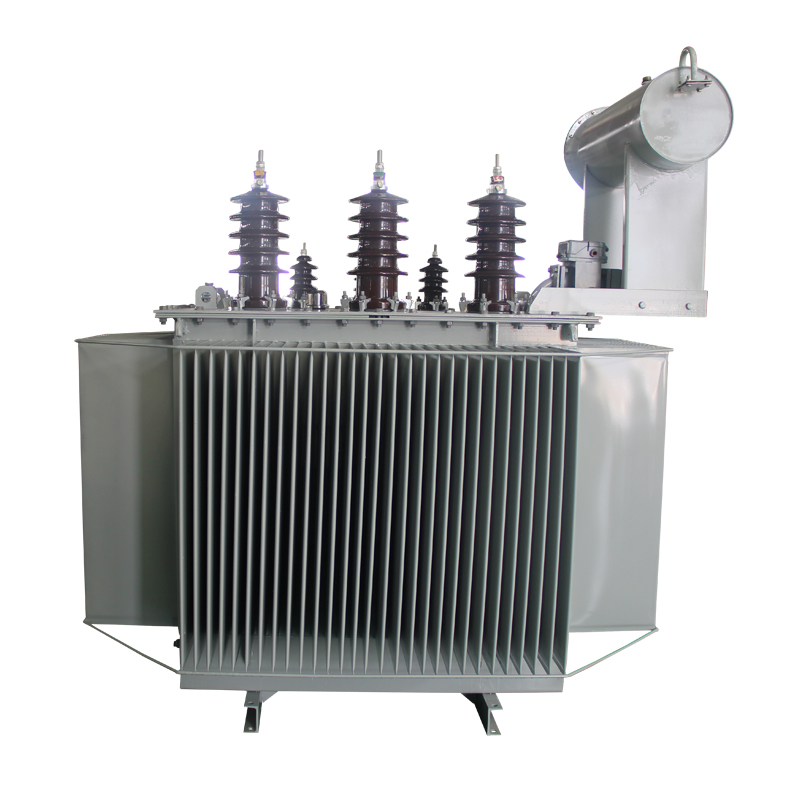
| Rated Capacity | 3150 kVA |
|---|---|
| Primary Voltage (U1) | 33,000 V (33 kV) |
| Secondary Voltage (U2) | 415 V / 240 V (3-Phase 4-Wire) |
| Vector Group | Dyn11 |
| Rated Frequency | 50 Hz |
| Cooling Method | ONAN (Oil Natural Air Natural) |
| Primary Current (I1) | 55.11 A |
| Secondary Current (I2) | 4382.4 A |
| Guaranteed No-Load Loss (P0) | 2800 W |
| Guaranteed Load Loss (Pk at 75°C) | 21000 W |
| Short-Circuit Impedance (Uk) | 5.0% |
| HV Insulation Level | LI 170 / AC 70 (33kV Class) |
| Temperature Rise Limits | Top Oil ≤ 50K, Winding ≤ 55K (45°C Ambient) |
| Creepage Distance | ≥ 31 mm/kV (Outdoor Tropicalized Porcelain) |
| Core & Coil Weight | 4500 kg |
| Insulating Oil Weight | 2600 kg |
| Total Assembled Weight | 8900 kg |
| Overall Footprint (L×W×H) | 2300 mm × 1480 mm × 2400 mm |
| Governing Standards | IEC 60076, BS 171, SON NIS, NERC Code |
Technical Highlights
- This product combines dependable transformer platform design, flexible project configuration, and practical export-oriented construction. It is suitable for applications requiring stable electrical performance, configurable voltage ratios, outdoor durability, and documentation support for international project supply.
Application Scenarios
- Solar power plants
- Wind farm collector and grid interface systems
- Photovoltaic station and inverter interconnection projects
- Battery energy storage systems (BESS)
- Renewable energy substations and export EPC projects
Key Features
- 3150 kVA rated capacity for renewable interconnection, step-up, or project-side power conversion
- Designed for solar, wind, PV, or energy-storage power system applications
- Configurable voltage ratio for inverter-side, collector-side, or grid-side connection
- Oil-immersed construction for dependable cooling in outdoor renewable projects
- Project-oriented accessory and monitoring options available
- Suitable for IEC-based renewable projects and export EPC supply
Optional Configurations
- Low-voltage side rating and voltage ratio
- Frequency: 50 Hz or 60 Hz
- Vector group and tapping range
- Copper or aluminum winding
- Cooling method, accessory package, and monitoring option
- Tank structure, coating system, and special environmental adaptation
- Color, nameplate language, and document package
- Ambient temperature, altitude, and installation condition adaptation
Frequently Asked Questions
Why is a step-up transformer required for a solar plant?
Solar inverters output low voltage; a step-up transformer raises it to the collection or grid voltage so power can be transmitted efficiently to the point of interconnection.
What losses can be expected from this transformer?
Loss values are confirmed at design stage against your specification and verified by routine tests on every unit before shipment.
Is the transformer suitable for high ambient and desert conditions?
Yes. Cooling class, insulation class and coating system are selected for the site ambient temperature, altitude and solar exposure of your project.
Can the transformer ratio be matched to my inverter output?
Yes. Low-voltage ratio, impedance and tap range are engineered to match your inverter and grid code requirements.
What documents are provided for grid interconnection approval?
A document package including routine test reports, nameplate data, outline drawings and loss measurements is supplied for utility interconnection submission.